In the early eighties, I showed my friends how to make quilts by adding concentric borders around a central square. Our “pass-the-medallion” quilts were a spin-off from this idea. Someone would start a center square, then pass it on to a friend who would add a border around it. She in turn would pass it on to another friend, and the quilt top would grow larger as it travelled around the Harbour. When nobody else wanted to add a border, it was considered finished, and we would then gather to quilt it.
We didn’t plan the quilt or worry about what it was going to look like—each person added whatever she wanted to. As Dolly remembers, “We just used whatever materials we had. Nobody went out and bought new fabric for the quilt. We dug through our boxes to see what we had.”
Galen’s Quilt, 1983

Photo by Julie Moore
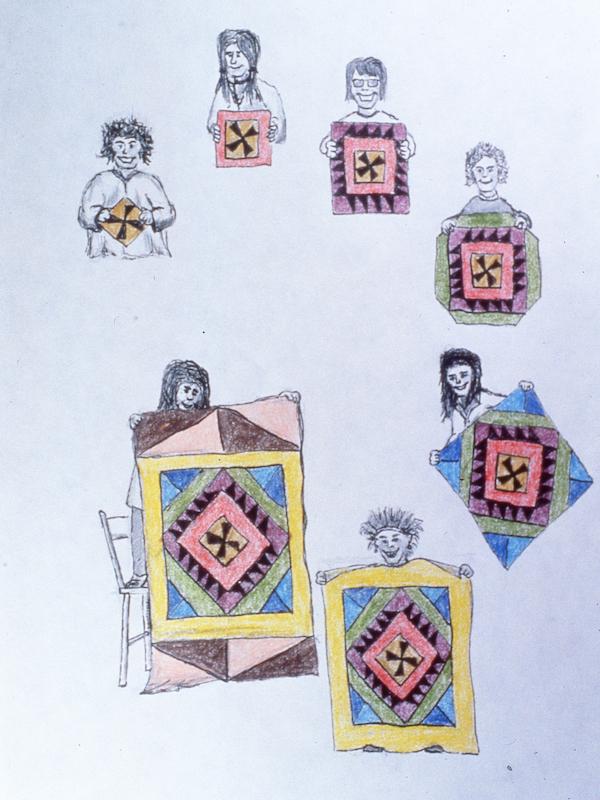
added a border.
Drawing by Iain Lawrence
Margo recalls receiving Galen’s quilt: “It was a quiet spring morning with the sun shining on the cabin. Galen was just a few weeks old. Hans and I were drinking coffee and a skiff pulled up at the dock. A wonderful group of women with wide smiling faces came up the dock and across to our place. They brought this beautiful quilt and a bottle of wine. We were so surprised. And so overwhelmed. At eleven in the morning, we all sat on the porch and drank the wine.”
Yavonnah’s Quilt, 1982
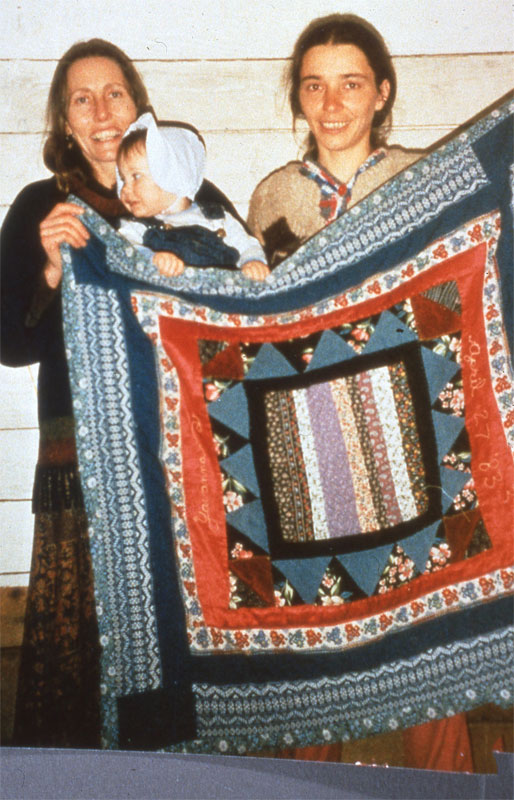
Lorrie sewed colourful strips of fabric together to make a patchwork square for the center of Yavonnah’s quilt, and Dolly framed it with a border patched out of bright triangles. Over the months, other friends passed around the growing quilt top, adding whatever they fancied.
Morgan’s Quilt, 1984
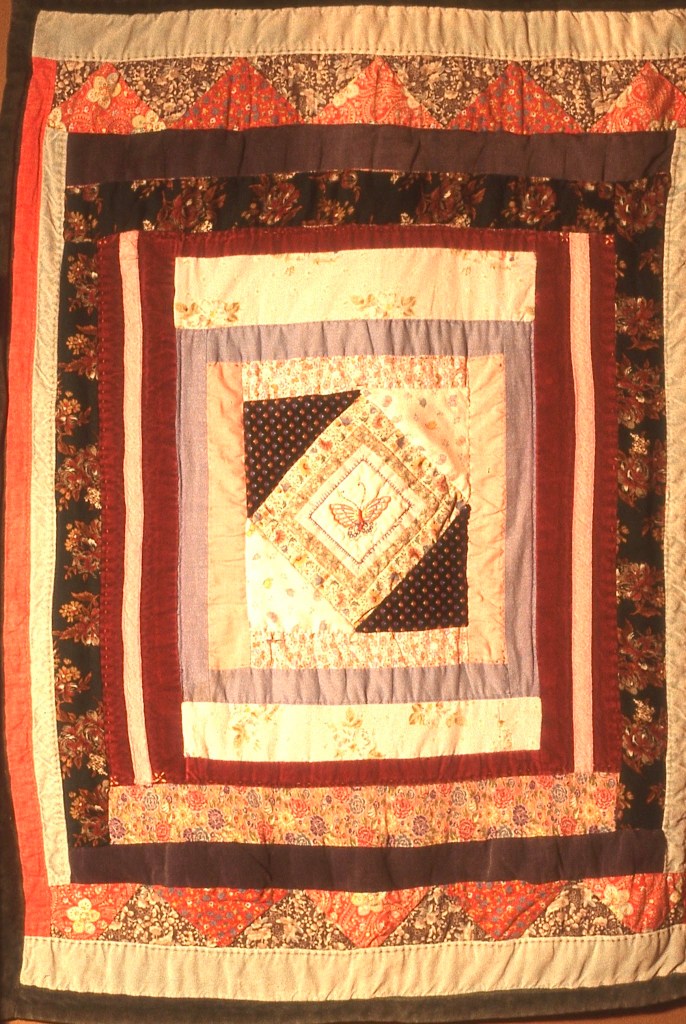
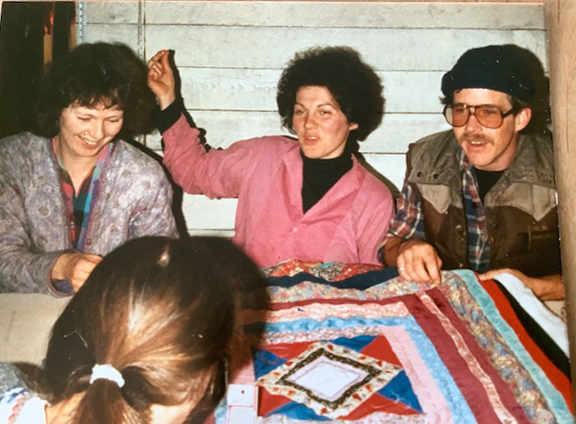
Dave was one of the first fellows to join the quilting circle.
Elron’s Quilt, 1984

Photo by Julie Moore
Elron’s quilt was serene yet lively, with nautical touches that honoured his seafaring father and welcomed his mother, a newcomer to the coast. The center medallion was appliquéd with black satin dolphins cavorting on a denim square, surrounded by an anchor-printed patchwork border.
On quilting day, the women embroidered emblems that expressed their hopes for the new baby: a castle with a jaunty flag to foster imagination, a sailboat to inspire a voyaging spirit, and fish, crabs and a seahorse to encourage love and respect for the sea.
The Banana Moon Quilt, 1984
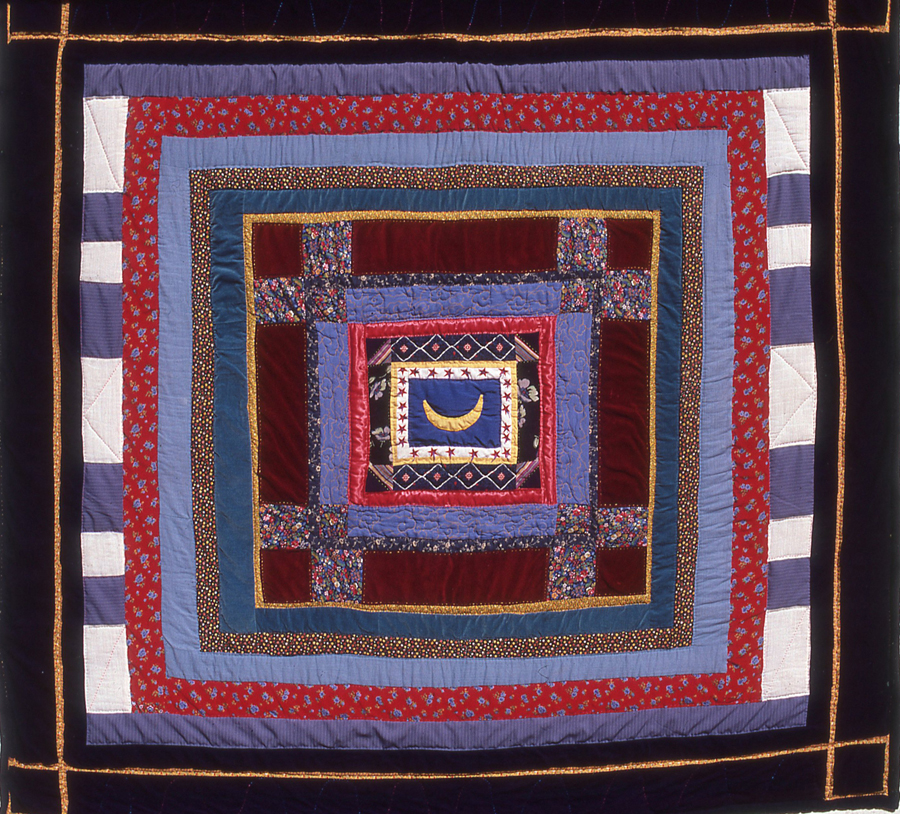
Photo by Julie Moore
Linda remembers appliquéing the center square: “It was meant to be a crescent moon, with stars around the outside, but it didn’t turn out. It looked like a flag I’d made years before, when we proclaimed Salt Lakes a banana republic.” We enjoyed the visual joke, because the groom was known for buying boxes of over-ripe bananas and drying them on racks above the woodstove. Six women and two men added borders around the banana moon square, creating our first full-size quilt.
 Knots and Stitches
Leave a comment